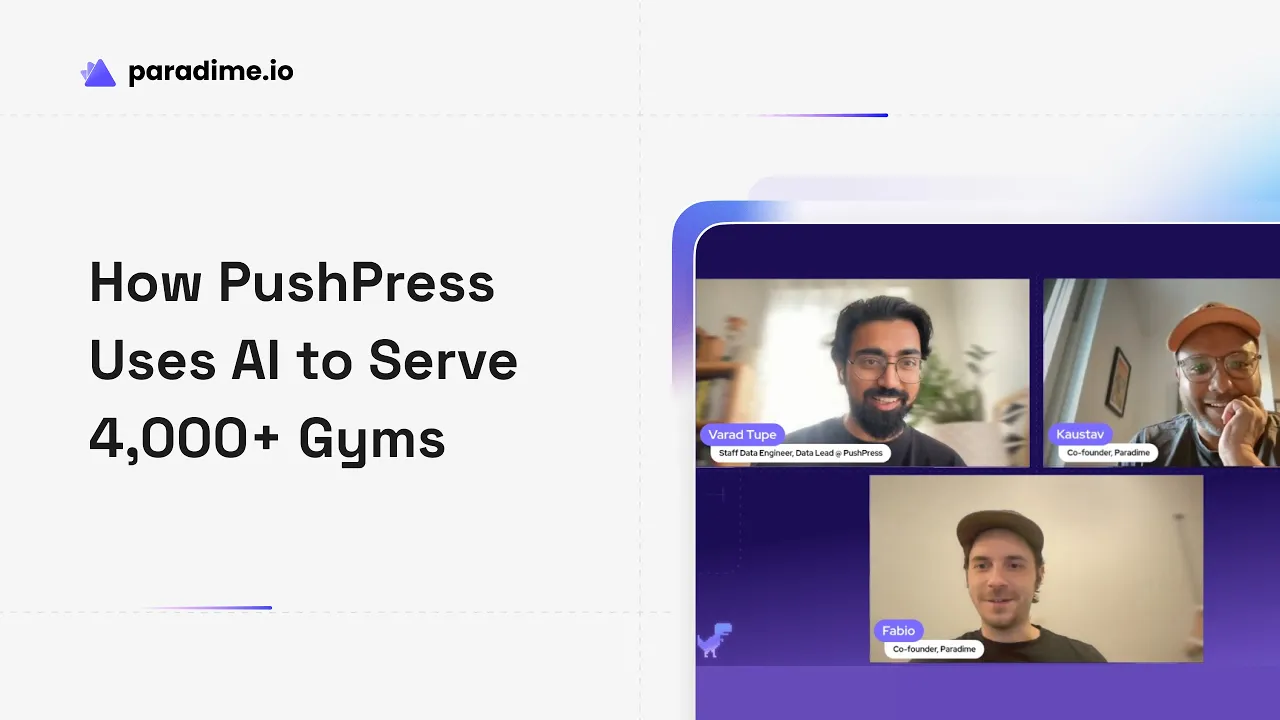
Introduction to Paradime
Paradime is an AI-powered analytics workspace that consolidates the entire analytics workflow into one unified platform, often described as "Cursor for Data." With features like DinoAI co-pilot for SQL generation and documentation, Paradime Bolt for production-grade dbt™ orchestration, and column-level lineage tracking, Paradime helps data teams achieve 50-83% productivity gains while reducing warehouse costs by 20%+. The platform eliminates tool sprawl and enables teams to ship 10x faster, making it the ideal choice for lean teams focused on delivering business value rather than managing infrastructure.
The PushPress Challenge: Scaling Data Infrastructure Without Scaling Teams
PushPress is a mid-market fitness platform serving over 4,000 gyms worldwide with comprehensive gym management software. As a Series A-B startup, PushPress faced a challenge familiar to growing tech companies: how to scale data capabilities without proportionally scaling their engineering team.
When Senior Data Engineer Varad Tupe joined PushPress, the mission was clear: re-platform the entire data stack. The existing setup wasn't leveraging modern tools and created significant barriers to innovation. The legacy infrastructure required constant maintenance and prevented the lean team from focusing on what truly mattered—solving business problems and delivering value to their gym partners.
For a Series A-B stage company, the data team's priority should be addressing business challenges, not wrestling with traditional data engineering obstacles. The team couldn't afford to spend cycles managing Spark clusters or maintaining complex Airflow DAGs. They needed a solution that would let three people accomplish what typically requires 8-9 team members.
Why PushPress Chose Paradime
Varad discovered Paradime through Reddit discussions in the data engineering community and immediately began comparing it against alternatives, including dbt Cloud™. The evaluation focused on finding a platform that could eliminate infrastructure overhead while maintaining enterprise-grade reliability.
The team prioritized solutions that offered a "configure and forget" philosophy—tools that would reliably run without constant babysitting. They needed a platform that could handle both traditional analytics workloads and emerging AI use cases, all while being intuitive enough for rapid team onboarding.
Building with Paradime's Core Features
Code IDE: Development That Feels Natural
Paradime's Code IDE provided a VS Code-like interface that was both dbt-native and immediately familiar to developers. This eliminated the learning curve typically associated with adopting new platforms. Varad built early data models demonstrating best practices, including proper use of views versus tables versus incremental models, and how to set up Bolt jobs effectively.
The entire team became proficient within their first month—a remarkable achievement for a comprehensive data platform. The intuitive interface and clear documentation made it easy for team members to understand data modeling patterns and start contributing quickly.
DinoAI: Your AI Pair Programmer
Paradime's DinoAI co-pilot proved invaluable for debugging and building queries, especially when working with unfamiliar data models. Rather than spending hours deciphering complex schemas, team members could rely on AI assistance to accelerate development and reduce errors.
Paradime Bolt: Orchestration Without the Overhead
Bolt's approach to orchestration aligned perfectly with PushPress's needs. Unlike traditional orchestrators that require constant tuning and monitoring, Bolt jobs could be set up once and trusted to run reliably without intervention.
One of Bolt's standout features is its AI summaries of pipeline logs. Instead of manually analyzing lengthy logs to diagnose issues, the team receives intelligent summaries that highlight problems and suggest solutions. This eliminated hours of troubleshooting work and reduced mean time to resolution.
Bolt's declarative approach to scheduling and built-in CI/CD capabilities meant the team could focus on logic rather than pipeline plumbing. Automated testing caught issues before they reached production, maintaining high reliability standards without manual gate-keeping.
Beyond Traditional Analytics: AI Pipelines in Production
PushPress isn't just using Paradime for traditional analytics—they're running production AI pipelines that directly serve their product features. By combining Snowflake's AI functions with Paradime's incremental models, they created efficient, scalable AI workflows.
One concrete example is their implementation of AI-powered summaries for Intercom chat messages. Using incremental models ensures that only new messages are processed, optimizing both cost and performance. This AI capability runs seamlessly alongside their traditional analytics workloads.
PushPress also built a sophisticated pricing recommendation engine that analyzes data from thousands of gyms across different locations, plan types, and gym categories. This AI-driven feature provides actionable insights to gym owners through their Metabase dashboards, helping them optimize pricing strategies based on market data.
The Results: Quantifying the Paradime Impact
100% Focus on Business Results
Perhaps the most significant outcome is that PushPress's three-person data team dedicates 100% of their time to solving business problems rather than managing infrastructure. There are no 3am pages about pipeline failures, no weekends spent maintaining Airflow, and no cycles wasted on capacity planning.
3X Team Efficiency Multiplier
The team of three delivers what would traditionally require 8-9 people. This isn't about working longer hours—it's about eliminating toil and focusing effort on high-value activities. By removing infrastructure management from the equation, each team member's impact is effectively tripled.
Zero Maintenance Overhead
PushPress achieved the holy grail of data platform management: 0% maintenance overhead. Pipelines set up months ago continue running reliably without intervention. This "set once" reliability freed the team from the constant firefighting that plagues many data operations.
Eliminating 5-6 Platform Engineering Roles
Without Paradime, PushPress would have needed to hire 5-6 additional platform engineers to maintain dbt Core, run an orchestrator like Airflow or Dagster, and manage alerting systems. These avoided hires represent significant cost savings while also reducing organizational complexity.
What the Alternative Would Look Like
Without Paradime, PushPress would need to maintain dbt Core, orchestration tools like Airflow or Dagster, monitoring systems, alerting infrastructure, and CI/CD pipelines. Each component requires specialized expertise, ongoing maintenance, and integration work.
Beyond the direct engineering costs, there are hidden expenses: context switching between tools, debugging integration issues, handling version upgrades, managing access controls across systems, and the opportunity cost of not building features that serve customers.
As PushPress continues to grow from 4,000 to potentially 10,000+ gyms, a DIY data stack would require proportional increases in infrastructure management effort. With Paradime, that scaling is handled by the platform, not by adding headcount.
Key Takeaways for Data Leaders
Infrastructure Shouldn't Be Your Product: Unless you're building a data infrastructure company, managing data platforms shouldn't consume your team's energy. Paradime allows you to treat infrastructure as a solved problem so you can focus on your actual product.
The Right Tools Multiply Team Impact: PushPress's 3x efficiency gain isn't about working harder—it's about working on the right things. When you eliminate toil, each team member can deliver dramatically more value.
AI Isn't Just for Analytics Anymore: Modern data platforms need to support both traditional analytics and AI workloads. Paradime's architecture makes it possible to run AI pipelines alongside standard transformations without maintaining separate infrastructure.
Lean Teams Can Achieve Enterprise Outcomes: With the right platform, a three-person team can deliver capabilities that traditionally required 8-9 people. This efficiency is particularly valuable for startups and mid-market companies where every hire matters.
Conclusion: Rethinking What's Possible with Modern Data Platforms
The PushPress story demonstrates what becomes possible when data teams are freed from infrastructure management. With Paradime, three engineers built and maintain a sophisticated data platform serving 4,000+ gyms, incorporating both traditional analytics and cutting-edge AI capabilities—all with zero maintenance overhead.
For data leaders evaluating their options, the PushPress case study offers a clear blueprint: choose platforms that eliminate toil, multiply team efficiency, and scale without requiring proportional increases in headcount. The future of data engineering isn't about managing more infrastructure—it's about delivering more value with less overhead.
Whether you're re-platforming an existing data stack or building from scratch, the principles that guided PushPress's success remain relevant: prioritize business value over infrastructure complexity, choose tools that grow with you, and never compromise on maintaining focus on what truly matters—serving your customers.


