The F1 Problem: When Everyone Has a Car, Who Needs a Racing Team?
When AI makes code writing a commodity, the gap between casual users and elite teams doesn't shrink. It becomes enormous.

Kaustav Mitra
·
5
min read
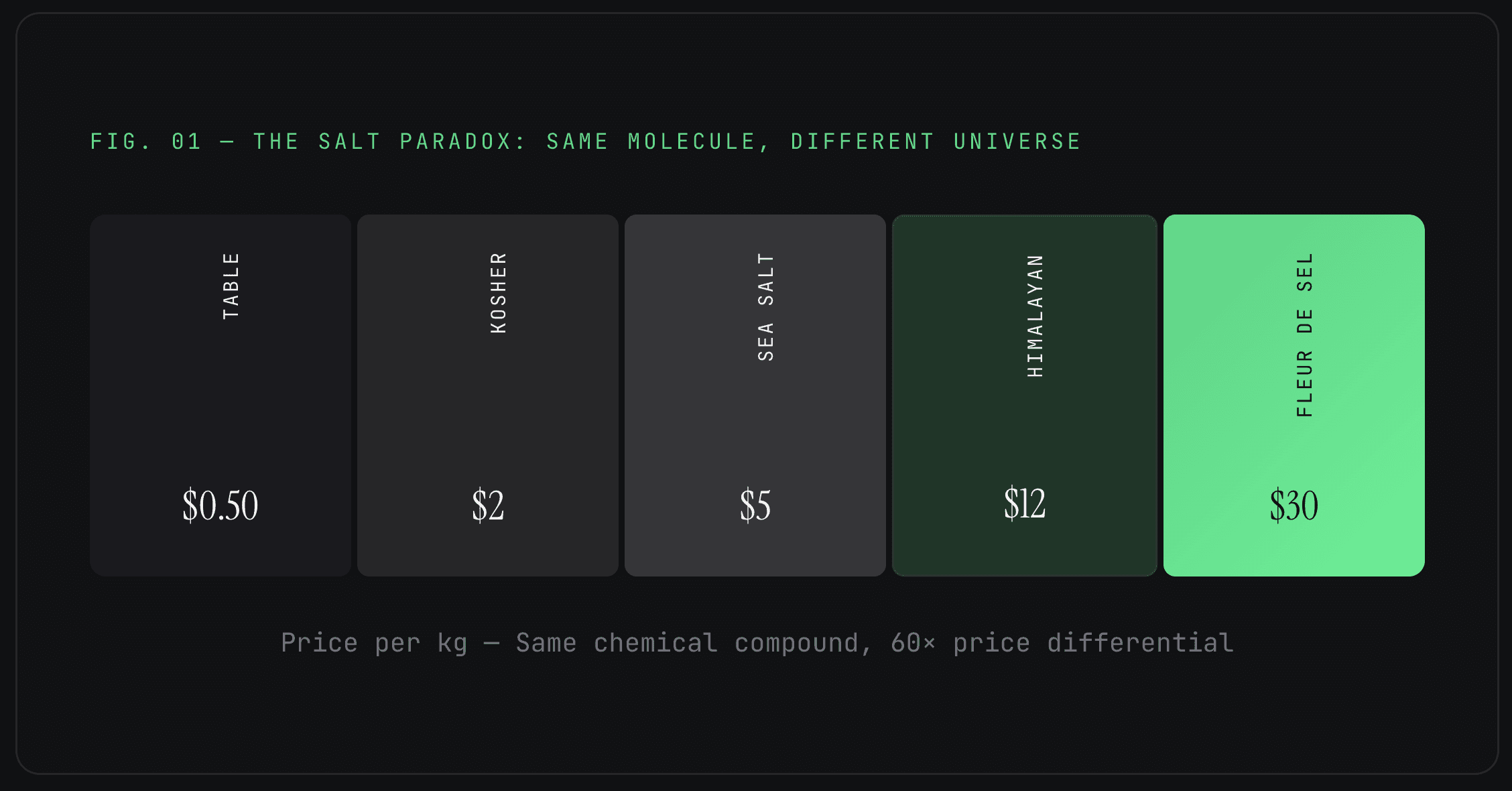
Salt is arguably the most commoditized substance on Earth. Every kitchen has it. Every restaurant. Every gas station snack bag. It costs almost nothing — a kilo of table salt runs you less than a dollar in most countries. And yet, Himalayan pink salt commands ten to thirty times that price. Fleur de sel? Even more. Maldon flakes sit on the shelves of specialty grocers with the quiet confidence of a product that knows its worth. Same molecule. Same NaCl. Wildly different value perception.
This is the story of AI coding tools right now. And most people are missing it completely.
The Cost of Code Just Hit Zero. Now What?
If you spend any time on LinkedIn right now, you'll encounter a particular breed of post. Someone fires up Claude Code, generates a hundred dbt™ models in an afternoon, and writes a breathless update about how "the game has changed." The comment section erupts. Heart reacts pile up. Someone calls it the future of data engineering.
And they're not wrong, exactly. They're just not seeing the whole picture. Because the act of writing code is now super cheap — effectively approaching zero marginal cost. But the value of the right code, in the right context, shipping reliably at scale? That's never been more expensive to achieve.
The cost of writing code going to zero has an unintuitive consequence. If code is essentially free to produce, then writing velocity is no longer the bottleneck. Writing performance is. The question isn't "how fast can you generate code" — it's "how good is the code you accept, and how quickly does it get you to the outcome?"
"If the cost of writing code goes to zero, nobody cares about writing more code. Writing performance becomes more important than writing velocity."
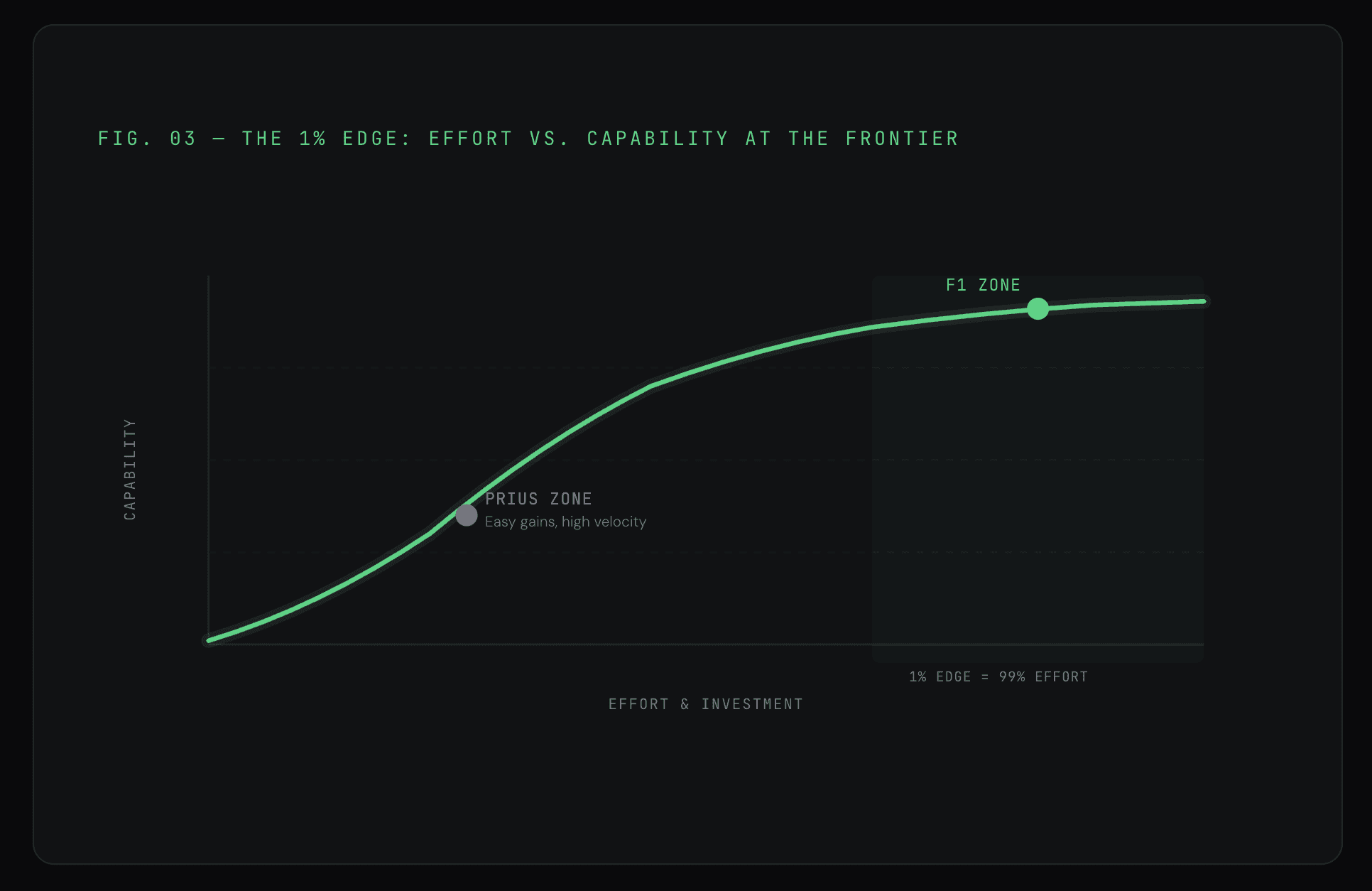
This is a distinction that gets lost in the LinkedIn demo reel. When you see someone generate a hundred dbt™ models with an AI tool, you're watching them drive a Prius. It's functional. It's efficient. It gets you to the supermarket and back. But nobody is confusing a Prius with a Formula 1 car.
Prius Mode vs. Pit Lane
Millions of people drive cars every day and believe they have a good car. They do. A modern sedan is an engineering marvel — airbags, fuel injection, GPS, lane assist. It's the product of a century of innovation trickling down into commodity. But then you see a Formula 1 car, and you realize you're looking at an entirely different species. Same four wheels. Same internal combustion principles. A completely different universe of engineering precision.
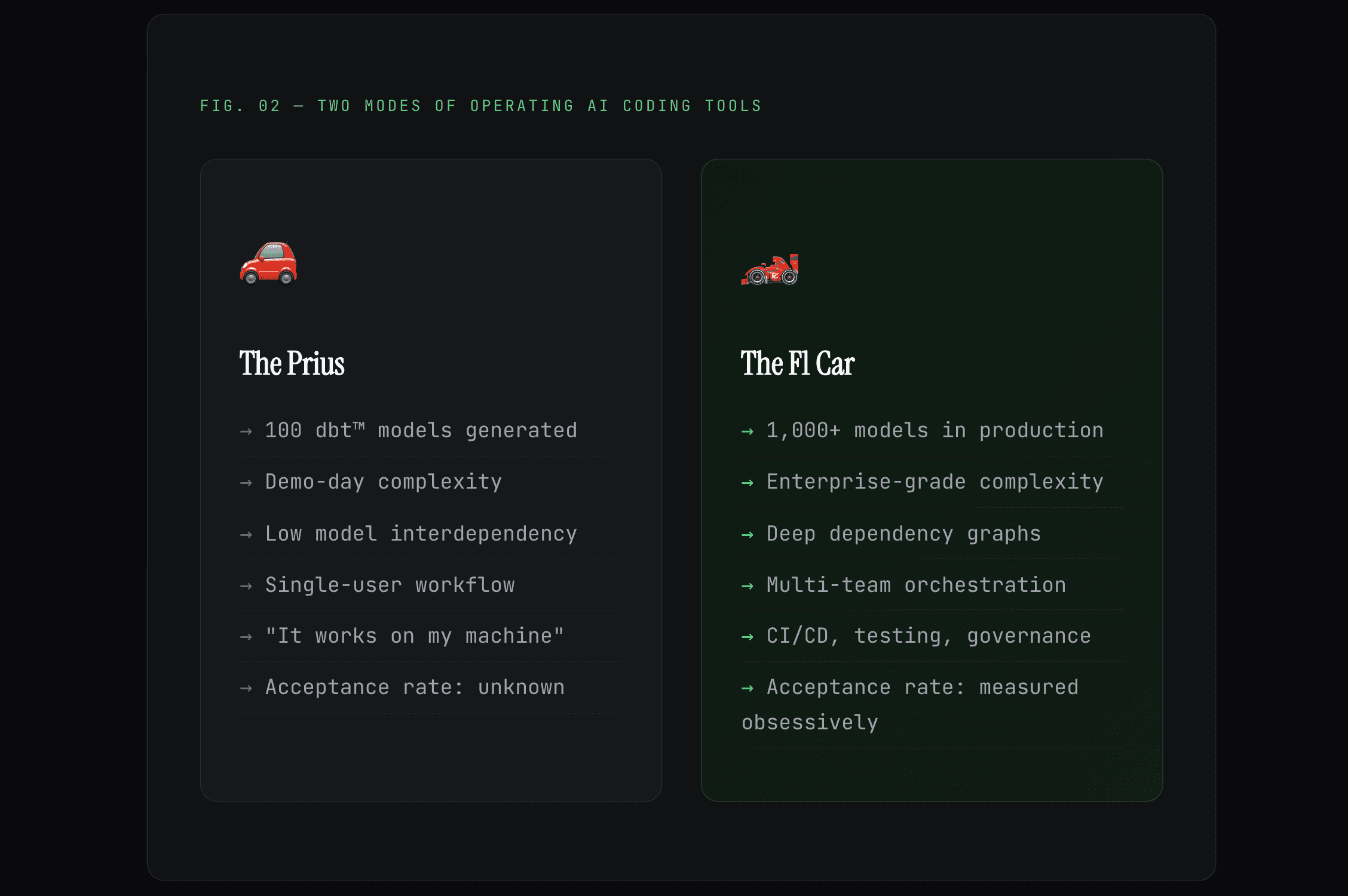
This is exactly the dynamic playing out in AI-assisted development. The LinkedIn influencers demoing a hundred dbt™ models with Claude Code are driving the Prius. It works. It's impressive relative to where we were three years ago. But enterprise data teams — the ones running a thousand interconnected models across multiple warehouses, with FP&A teams downstream, with regulatory requirements, with SLAs that actually matter — those teams need the F1 car.
And here's the beautiful irony that makes this analogy more than metaphor: the Prius literally descends from F1 technology. Toyota's hybrid system — KERS, the kinetic energy recovery system — was born on the Formula 1 track. They experimented at the extreme. They absorbed the development cost. Then they deployed it at commodity scale. That's how elite innovation becomes everyday reality. It trickles down. But the people driving the Prius don't get to claim they're racing in the Grand Prix.
What "Premium" Actually Means
So if everyone has access to the same AI coding tools — and they increasingly do — where does the premium emerge? It's not in the code generation itself. That's table salt. The premium is in three things.
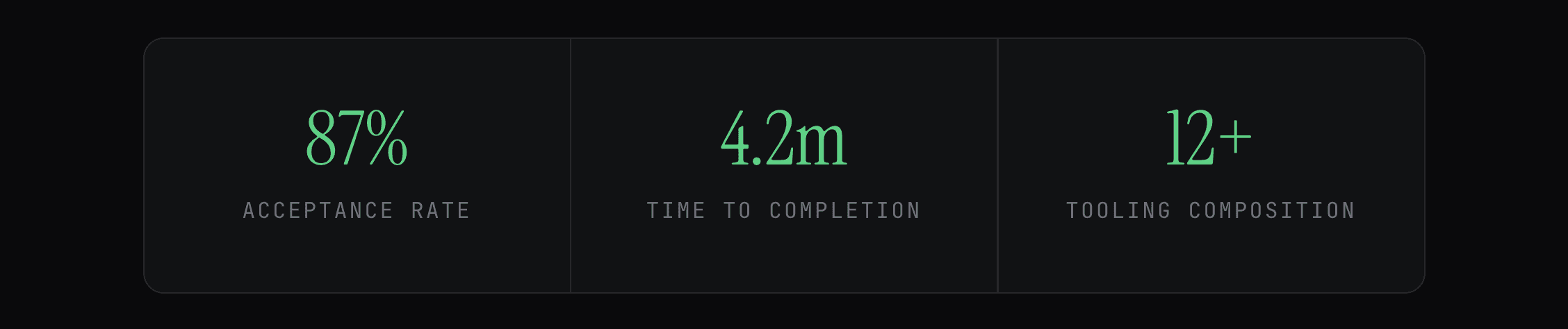
Acceptance rate: How much of the AI-generated output do you actually keep? The people posting LinkedIn demos don't talk about this because, in a demo, you accept everything. In production, the acceptance rate is the entire game. An elite team doesn't just generate code — they have the architecture, the context-awareness, and the prompt engineering to generate code that's right the first time. Measuring acceptance rate is the difference between having a speedometer and just feeling like you're going fast.
Time to completion: Not time to generation — time to completion. How long from intent to merged, tested, deployed, monitored code? This is where the composition of your tooling stack matters enormously. The AI experience isn't just the LLM response. It's the amalgam of tooling around it — the CI pipelines, the testing frameworks, the governance layers, the deployment automation — that turns a generated snippet into a production asset.
Composition of tooling: Elite teams aren't just using one tool. They're composing entire ecosystems — agents that understand their data lineage, tools that know their schema conventions, frameworks tuned to their specific domain. The ticket becomes the prompt. The Linear issue is the specification that gets executed. There's no loss of information between intent and implementation. That integration density is the Himalayan salt of the development world.
The Cambrian Moment
We are living in what feels like a Cambrian moment for developer tooling. Things are changing so quickly that a partnership announced two months ago can be made obsolete by a feature launch today. The velocity is disorienting. And in that disorientation, a lot of people are mistaking access for mastery.
They're not the same thing. Access is the Prius. Mastery is the racing team — the pit crew, the telemetry engineers, the aerodynamicists, the strategists who know when to pit and when to push. Access gets you on the road. Mastery gets you on the podium.
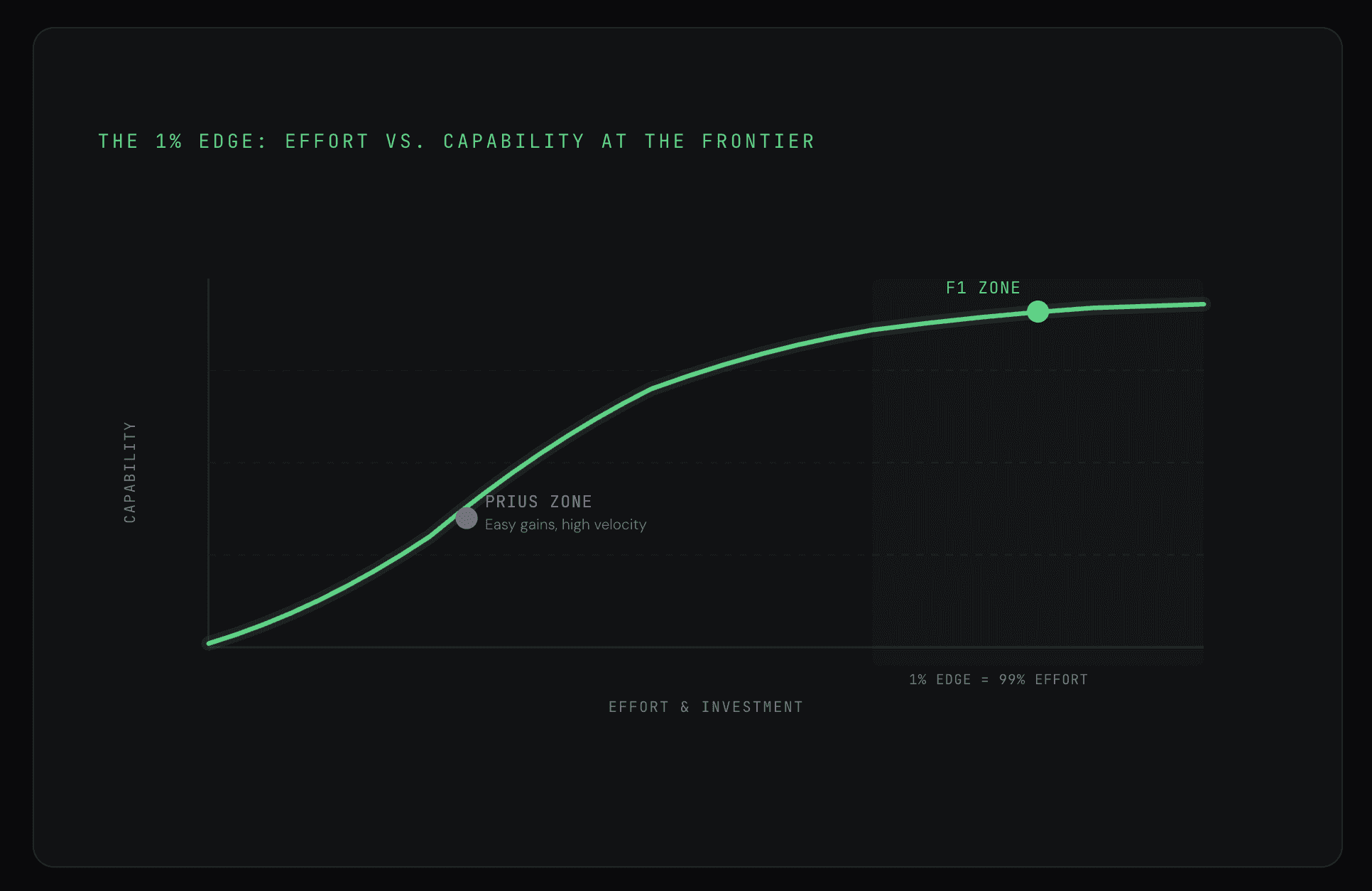
And here's the thing about the asymptote we're all climbing: we've reached the flat part. The early gains from AI tools were dramatic — a 10x improvement was genuinely available to almost anyone. But now, squeezing out that last 1% of edge requires 99% of the effort. That's where the real competition lives. That's where the F1 teams operate.
The people who grab that experience early — who learn to operate at the frontier, not just at the surface — will take a disproportionate share of what comes next.
So the next time you see a LinkedIn post celebrating a hundred AI-generated models, appreciate it for what it is: a Prius driving smoothly down a well-paved road. Then ask yourself what the team with a thousand models, a 90% acceptance rate, and a four-minute time-to-completion is doing. Because that's the F1 car. And that's where the race is actually being won.


